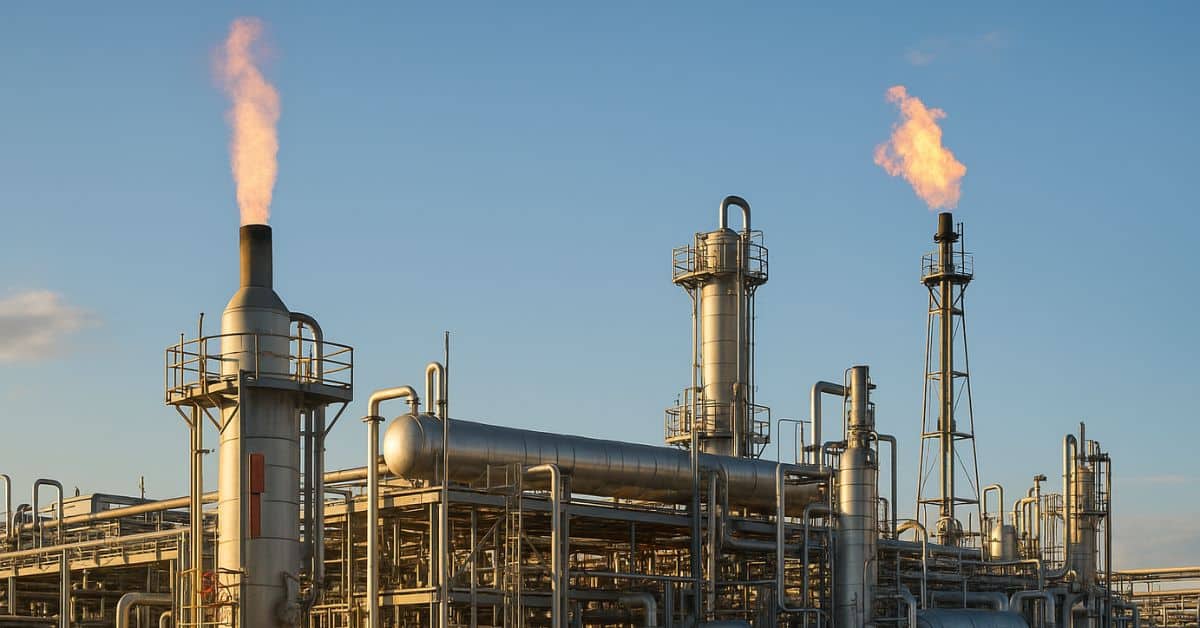
Every winter, the same call comes in from somewhere in the field: a choke froze, a regulator iced over, or a line downstream of a pressure cut plugged with hydrates. Production stops, someone drives out in the cold, and the fix is usually heat that should have been there before the temperature dropped.
A properly sized and maintained water bath heater is one of the simplest ways to keep that from happening. This guide covers how water bath heaters work, why they matter most at pressure letdown points, and what to check before the coldest months arrive.
What Is a Water Bath Heater?
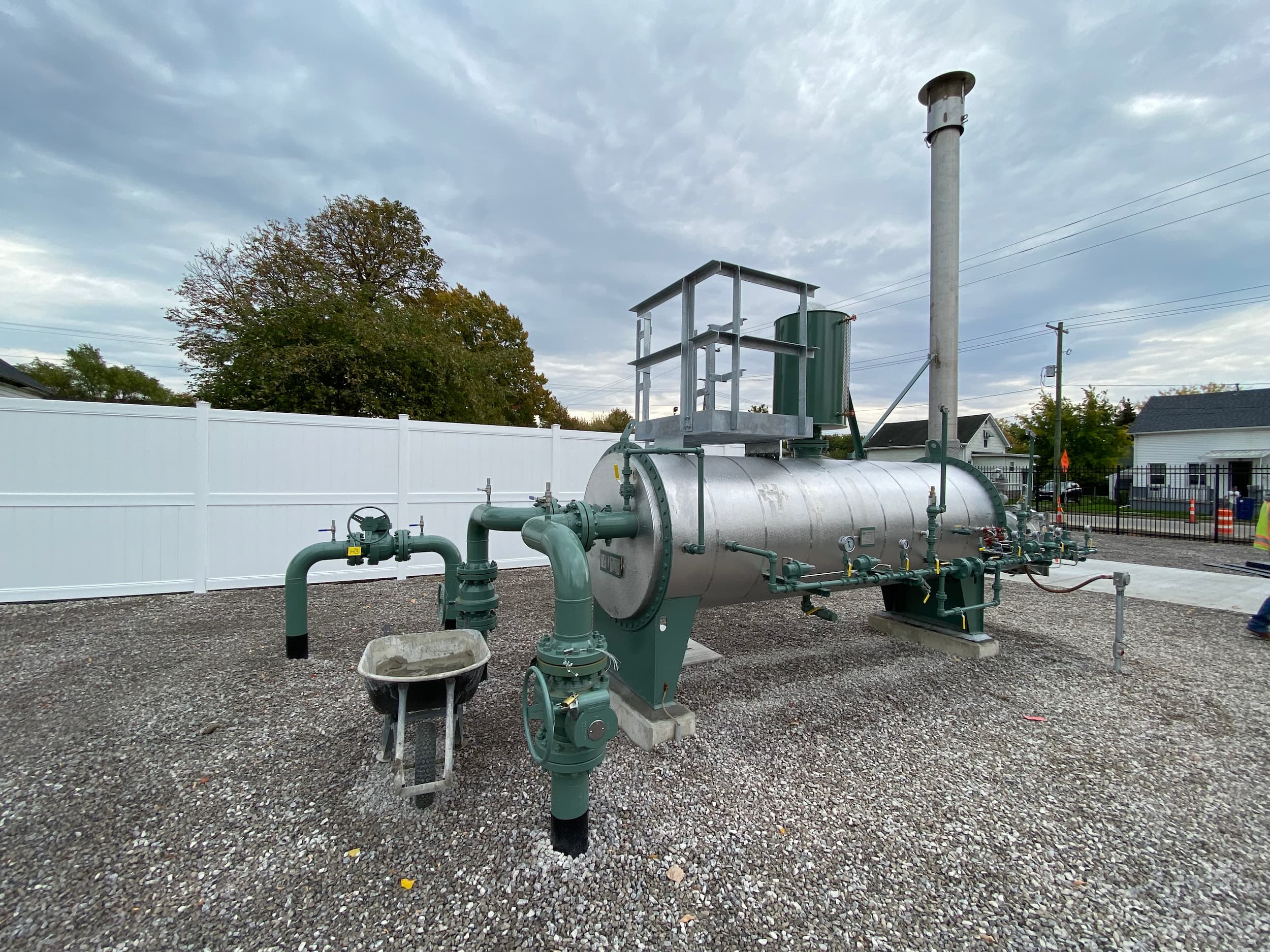
A water bath heater, also called an indirect line heater or dew point heater, warms natural gas or other process fluids without exposing them to an open flame. It is one of the most common pieces of process heating equipment on gas production, gathering and transmission sites.
The design has three main parts:
- Firetube and burner: A burner fires into a firetube submerged in the bath. The fuel train and controls manage the flame and the bath temperature.
- Bath solution: Usually water, or a water and glycol mix in cold climates, that surrounds the firetube and absorbs its heat.
- Process coil: The gas flows through a coil also submerged in the bath. Heat moves from the firetube, into the bath, and into the coil.
Because the flame never touches the process stream, heat transfer is gentle and even. That makes indirect water bath heaters a safe, stable choice for flammable gas and for sites where hot spots or flame contact would be a risk.

Why Gas Freezes at Pressure Letdown
The biggest job for a line heater is protecting pressure reduction points: chokes, control valves, regulators and city gate stations.
When natural gas drops in pressure, it cools. This is the Joule-Thomson effect, and the drop can be significant. A common rule of thumb is roughly 7°F of cooling for every 100 psi of pressure drop, though the exact number depends on gas composition and conditions.
Cold gas creates two problems:
- Hydrates. Water and light hydrocarbons can combine into a solid, ice-like material at temperatures well above 32°F when pressure is high. Hydrates plug chokes, valves and lines.
- Liquid dropout and icing. Gas that falls below its dew point drops out liquids, and external icing can lock up regulators and instruments.
Heating the gas upstream of the letdown point keeps the downstream temperature above the hydrate formation point and the dew point. That is exactly what a dew point heater is built to do.
Water Bath Heater Applications
Water bath heaters show up anywhere gas needs a controlled temperature rise:
- Wellhead and production sites: Heating gas ahead of chokes to prevent freeze-offs.
- Gathering systems and compressor stations: Keeping gas above its dew point between processing steps.
- Pressure letdown and city gate stations: Offsetting Joule-Thomson cooling before gas enters distribution.
- Fuel gas conditioning: Supplying warm, dry fuel gas to engines, turbines and burners.
- Ahead of separation and dehydration: Improving liquid separation and protecting gas dehydration equipment downstream.
Water bath heaters work alongside the rest of the process. Removing water through dehydration lowers the hydrate risk, and heating keeps whatever moisture remains in vapor form.
How to Size a Line Heater
An undersized heater will not hold temperature on the coldest day. An oversized one wastes fuel all season. Sizing should account for:
- Flow rate, including future production, not just today’s numbers.
- Inlet and outlet pressure, which determine how much cooling the letdown causes.
- Inlet gas temperature in the coldest expected conditions.
- Gas composition and water content, which set the hydrate and dew point temperatures.
- Required outlet temperature, with a safety margin above the hydrate point.
- Ambient conditions and fuel availability at the site.
TPS consulting and design and process modeling and optimization help confirm heater duty, coil design and bath temperature before equipment is built, so the unit fits the site instead of the other way around.

Winter Maintenance Checklist for Water Bath Heaters
Most freeze-offs happen at sites that had a heater. The heater just was not ready. Before the first hard freeze, check:
- Bath level and solution. Top off the bath and confirm the glycol concentration protects against freezing if the burner goes down.
- Bath pH and corrosion. Monitor pH to limit acid-related corrosion of the firetube and coil.
- Burner and fuel train. Clean the burner, inspect the pilot and confirm fuel train pressures.
- Filters. Clean or replace fuel gas filters so the burner gets clean, steady fuel.
- Temperature controls. Verify the bath and outlet setpoints and test the controls and safety shutdowns.
- Firetube and coil inspection. Look for leaks, corrosion, scale and damage.
- Combustion tuning. A tuned burner holds temperature with less fuel and lower emissions. TPS combustion tuning and emissions testing can confirm the burner is running clean and efficient.
For a broader cold weather plan, see our guides on winter inspection protocols and how cold weather impacts facility reliability.
Signs Your Water Bath Heater Needs Attention
- Outlet temperature drifting below setpoint on cold days
- Frequent burner trips or pilot outages
- Rising fuel use without a change in throughput
- Visible bath loss, scale or discolored solution
- Hydrate or freeze-off events downstream despite the heater running
Any of these is a reason to schedule service before a small issue becomes a shutdown.
Skid-Mounted Water Bath Heaters From TPS
TPS designs, builds and commissions skid-mounted process heating systems for the oil, gas, gas transmission and utility industries. Each water bath heater is built around the site’s flow rate, pressure, gas composition and environment, to ASME and API requirements. Our startup and commissioning team makes sure it runs right from day one.
Frequently Asked Questions
What is the difference between a water bath heater and a line heater?
They are usually the same equipment. “Line heater” describes the job, heating a gas line, and “water bath heater” describes how it works, with an indirect water bath.
Why use an indirect heater instead of a direct-fired heater for gas?
An indirect water bath heater keeps the flame away from the process stream. Heat transfer is even, there are no hot spots on the coil, and the bath acts as a buffer that holds temperature steady.
What temperature should a water bath heater run?
It depends on the gas, the pressure drop and the hydrate point. The outlet target should sit above the hydrate formation temperature with a safety margin. A process model is the best way to set it.
Can a water bath heater help with hydrates if the gas is already dehydrated?
Yes. Dehydration lowers the hydrate point, but large pressure drops in cold weather can still push gas into the hydrate range. Heat adds a second layer of protection.
Get Your Site Ready Before the Freeze
Do not wait for the first freeze-off to find out a heater is undersized or overdue for service. Contact TPS or call (918) 376-6371 to size a new water bath heater, schedule winter service or tune an existing unit.